Unraveling Personality: A Guide to Modern and Ancient Analysis Tools
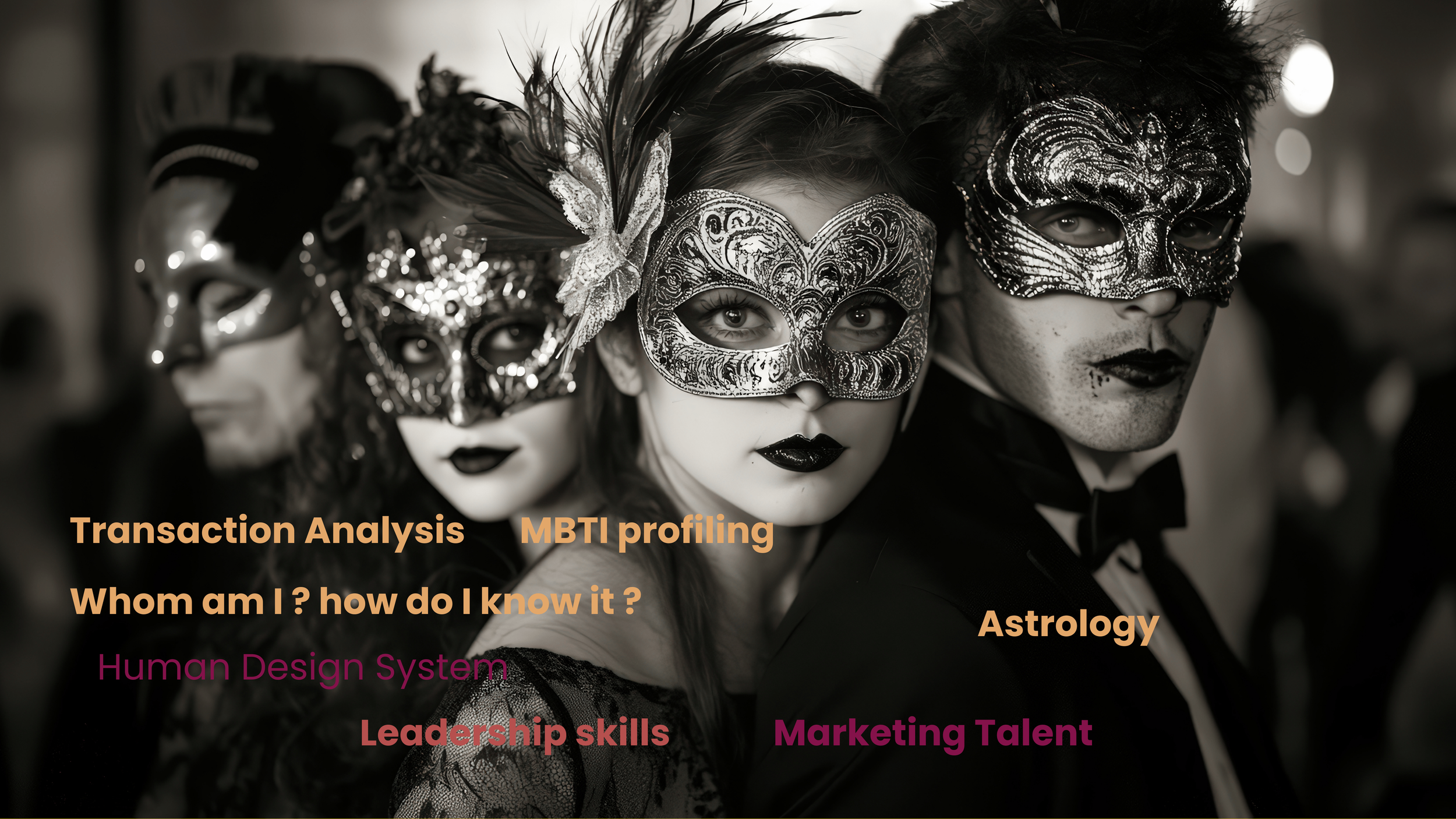
Personality analysis has a long-standing history, echoing back to when humanity first began to wonder about the complexities of human behavior. Ancient philosophers and scholars diligently observed patterns in behavior, attempting to classify and make sense of the apparent chaos of human personalities. Early models often intertwined with spiritual and medical theories, hinting at a soul-body connection.
As humanity progressed through the centuries, the interest in unpacking human personality grew. The 20th century marked a significant shift as scientific inquiry and psychology began an era of new tools, giving rise to renowned frameworks like the Myers-Briggs Type Indicator (MBTI), the Enneagram, and eventually, the Human Design System although prevalent since 1997 suddenly got noticed in the market. Each tool offers a unique lens through which individuals can view themselves and others, providing structure and meaning to human diversity.
The Impact on Self-Discovery
The advent of personality analysis tools has had a profound impact on the process of self-discovery. By providing a structured approach to understanding one's traits, motivations, and potential areas for growth, these tools have empowered individuals to explore their inner landscapes with newfound clarity. The journey within, previously a path only traveled by philosophical introspection, has been made accessible through quizzes and assessments that reveal intricacies of one's psyche.
For a seeker on the quest of self-awareness, these tools illuminate paths previously obscured by the shadows of uncertainty. They help uncover innate strengths and pinpoint areas ripe for development, fostering a sense of purpose and direction. Furthermore, by understanding personality types, individuals can improve interactions, build empathy, and establish more meaningful connections with others, enhancing both personal and professional relationships.
Comparing Ancient and Modern Approaches
Both ancient and modern approaches to personality analysis provide valuable insights, each with its set of merits and unique perspectives. Ancient philosophies often centered around holistic and spiritual interpretations, with systems like astrology and the Four Temperaments linking personality traits to cosmic or elemental forces.
Modern approaches, while grounded in empirical research, emphasize psychological categorization, using data and patterns to guide assessments. For instance, the MBTI and Enneagram rely on structured questionnaires to identify inherent traits and propensities, whereas ancient systems might have utilized charts or elemental correspondences.
Despite their differences, both methods converge on a vital point: the understanding that human beings are multifaceted and beautifully complex. Each system, modern or ancient, acts as a mirror reflecting our inner worlds, encouraging us to embrace the depths of who we are.
In Human Design System - BG5® Business Personality analysis, we look into the business team dynamics and leadership analysis. This provides a key insight into the team member’s business skills and key attributes critical for success in management and leadership.
To dive into this and experiment , get your Free Human Design Chart
“Until you make the unconscious conscious, it will direct your life and you will call it fate,”
- Carl Jung
Transaction Analysis
Origins and Development
In the mid-20th century, Dr. Eric Berne, a visionary psychiatrist, introduced Transactional Analysis (TA). He believed that by understanding the interactions between individuals, one could gain deeper insights. Berne identified the concept of "ego states"—Parent, Adult, and Child—that underpin our communication and behavior.
I became fascinated by this theory during my advanced studies at the Indian Institute of Management Ahmedabad (IIMA). Our professors organized a seven-day workshop off-campus, where we explored this theory in-depth. During the workshop, we shared and discussed our life stories and responded to numerous assessment questions, which greatly enhanced our understanding of TA.
The development of TA marked a revolutionary stride in psychotherapy as it prioritized not just internal psychological processes but also the interactions and transactions between people. This interaction-focused approach set TA apart from other contemporary methods, positioning it as a practical tool for improving communication and relationships in various settings.
Key Concepts and Applications
At the heart of Transactional Analysis are the ego states: Parent, Adult, and Child. These states represent internal models derived from our own behaviors and those we observed growing up.
Parent: This state comprises attitudes and behaviors learned from authority figures, like parents or caregivers. It governs our sense of right versus wrong and often dictates our adult responsibilities and nurturance roles.
Adult: Considering the rational state, it processes information objectively, free from emotional charge. This ego state employs logic and reason, balancing the influence of both Parent and Child states.
Child: Comprising emotions and recollections from our youth, this state influences our playfulness, creativity, and spontaneity, yet can also reflect insecurities stemming from childhood experiences.
Using these concepts, TA analyzes transactions—stimulus-response units in communication—to identify dysfunctional patterns that may lead to personal or relational challenges. By recognizing which ego state is dominating during interactions, individuals can adjust their communication for healthier outcomes, whether in the workplace, at home, or in social settings.
Benefits and Limitations
Transactional Analysis boasts numerous benefits, not least of which is its focus on improving interpersonal relationships. By understanding the dynamics of our interactions, individuals can foster more constructive and empathetic communication, leading to increased personal effectiveness and enhanced emotional intelligence.
Moreover, TA provides an accessible framework that can be used in both therapy and everyday situations, making it an invaluable tool for personal development. It's especially effective in group settings, offering insights into team dynamics and helping resolve conflicts with clear, communication-based strategies.
However, like any tool, Transactional Analysis has its limitations. While it provides exceptional insights into communication patterns, it may be less effective for exploring deep-seated psychological issues that require more intensive therapeutic interventions. Additionally, for those seeking immediate solutions, TA might seem time-consuming, as it requires consistent effort and self-reflection to instigate lasting change.
In conclusion, as we continue to explore and compare both modern and ancient wisdom in personality analysis, we unlock tools that not only enrich our understanding of others but ourselves. By blending traditional insights with contemporary research, we pave the way for a fuller, more genuine embrace of who we are at our core—a step that is, perhaps, the most crucial in our collective journey towards self-discovery and personal fulfillment.
“You can’t just ask the customers and then try to give that to them. By the time you get it built, they’ll want something new.”
~ Steve Jobs
Myers-Briggs Type Indicator
The Myers-Briggs Type Indicator (MBTI) stands as a beacon in the vast world of personality analysis. Born from the early 20th-century experiments of Isabel Briggs Myers and her mother Katharine Cook Briggs, this instrument seeks to map out the varied tapestry of human personality. Rooted deeply in the work of Carl Jung, the MBTI emphasizes the value of a systematic approach to understanding ourselves and others.
Psychological Theories Behind It
At the heart of the MBTI lies Carl Jung's theory of psychological types, which suggests that our seemingly random behavior is actually quite orderly and consistent. Jung introduced the concepts of introversion and extraversion, and Myers and Briggs expanded upon these ideas to explore the dynamics of personality in greater depth. They believed that everyone has a natural preference in how they approach the world, similar to our dominant hand, and this preference influences how we gather information, make decisions, and interact with people.
The MBTI classifies individuals based on four dichotomies:
Extraversion (E) vs. Introversion (I): Focus on the external world versus internal thoughts.
Sensing (S) vs. Intuition (N): Preference for tangible details or abstract possibilities.
Thinking (T) vs. Feeling (F): Decision-making based on logic versus personal values.
Judging (J) vs. Perceiving (P): Desire for structure versus spontaneity.
These combinations give rise to the 16 personality types, each marked by a unique orientation in how they perceive and operate in the world.
Understanding the 16 Personality Types
The MBTI's 16 personality types offer a rich framework for self-discovery. Each type is a combination of the four dichotomies, creating a profile that can illuminate our strengths, potential challenges, and growth potential.
ISTJ (The Inspector): Logical, detail-oriented, and reliable.
INFJ (The Counselor): Insightful, compassionate, and values-driven.
ENFP (The Champion): Enthusiastic, creative, and communicative.
ENTJ (The Commander): Decisive, strategic, and natural leaders.
Such categorizations help in recognizing our innate tendencies and can be a powerful tool in understanding personal conflicts or career choices. It is important, however, to remember that each type is a fluid guideline rather than a rigid box.
Real-World Applications and Criticisms
The Myers-Briggs Type Indicator has found its place in numerous settings. In workplaces, it's used for team-building, resolving conflict, and enhancing communication. Educational institutions employ it for career guidance, helping students understand their learning styles and areas of strength. Personal relationships can also benefit from these insights, offering a way to comprehend differing worldviews.
Despite its widespread application, the MBTI is not without its criticisms. Some psychologists argue it lacks empirical evidence and falls short in predictive validity. They criticize its binary approach to human behavior, suggesting that it oversimplifies the complexity of psychology. Despite these critiques, many individuals find value in the MBTI as a means to commence their journey of self-awareness.
Enneagram
The Enneagram is another profound personality analysis tool that has been cherished across centuries. With its roots in ancient spiritual traditions, it offers a deep, intricate understanding of the psyche. Unlike many other systems, the Enneagram doesn't just address what you do but delves into why you do it—the motivations behind behaviours.
The Nine Personality Types
In the Enneagram system, there are nine distinct personality types, each centered around a spectrum of traits, desires, and fears.
The Reformer: Principled, purposeful, self-controlled.
The Helper: Generous, demonstrative, people-pleasing.
The Achiever: Adaptable, excelling, driven to succeed.
The Individualist: Expressive, creative, and unique.
The Investigator: Innovative, secretive, perceives deeply.
The Loyalist: Committed, reliable, seeks security.
The Enthusiast: Spontaneous, versatile, scattered.
The Challenger: Assertive, resourceful, self-confident.
The Peacemaker: Easygoing, accepting, complacent.
Each type is not just a label but a lens through which we can better understand our core motivations. This tool highlights the journey of personal growth, advocating for the transformation from a place of imbalance to wholeness.
The Role of the Enneagram in Personal Growth
The Enneagram is not just about categorization; it's a map for transformation. By identifying our type, we unearth our core motivations and fears. This understanding can serve as a pivotal step in our journey toward personal development.
As we recognize the patterns in our behavior, we find the courage to address areas of imbalance and embrace our strengths. The Enneagram encourages introspection and authentic growth, urging us to move beyond superficial self-improvement to a deeper, more harmonious life.
The principles embedded within each type highlight lessons in resilience, adaptability, and the quest for inner peace. Whether we seek to overcome self-doubt or cultivate true compassion, the Enneagram provides a pathway to navigate these challenges.
Integration with Other Personality Tools
A unique aspect of the Enneagram is its integration potential with other personality analysis tools, such as Transaction Analysis or the Human Design system. While the Enneagram focuses on the 'why' behind behaviors, tools like MBTI might focus on the 'how.'
When employed together, these instruments can offer a nuanced view of an individual, marrying motivation with methodology. For instance, understanding your Enneagram type may illuminate why you make certain decisions, while knowing your MBTI type could explain how you process information to reach those decisions.
In personal growth workshops, spiritual retreats, or team development sessions, the combination of the Enneagram with other systems creates a more holistic approach to self-discovery and interpersonal dynamics. This synthesis encourages a broader spectrum of exploration and provides the necessary tools to decode the complexity of the human experience.
In conclusion, as we navigate through the interwoven paths of various personality analysis tools, we craft a journey that is uniquely ours. By understanding where our strengths lie and where our shadows loom, we empower ourselves to forge magical connections with the world around us. Through the wisdom of both modern and ancient methodologies, the tapestry of who we are comes more vividly into focus, encouraging us to evolve into the best versions of ourselves.
“We are not here to suffer - we are not here to feel pain. It’s a lie, it’s always been a lie. ‘Ignorance’ is here to suffer. This is why we were sent to seek true information. And there is no pain in wisdom.”
~ Ra Uru Hu
Human Design System
The Human Design System is a fascinating and unique approach to personality analysis that merges ancient wisdom with modern sciences to guide individuals towards self-discovery and personal growth. It offers a map and a framework that illuminates one’s inherent potentials and life path. Let’s delve deeper into its intriguing origins, components, and practical applications.
Origins and Components
Human Design System was founded by Ra Uru Hu, Alan (Robert) Krakower. He was Canadian born and lived in Montreal and then moved to Ibiza and came to USA to spread knowledge of this unique system. He introduced this system in the late 20th century. However, it draws upon a symphony of ancient traditions and modern scientific disciplines. The key components of Human Design stem from:
I Ching: The ancient Chinese divination text provides the 64 hexagrams that form the basis of the Human Design chart.
Astrology: Alignments of celestial bodies correlate to the design and personality of an individual.
Kabbalah: Offers the Tree of Life framework that describes the paths and connections within a person's life plan.
Chakra System: Expands upon the traditional seven energy centers, categorizing nine centers in Human Design.
Genetics: Integrates principles of quantum mechanics and biochemistry, asserting that our DNA is encoded with these archetypal patterns.
These combined elements create a comprehensive chart, also known as a bodygraph, that is unique to each individual, representing a blueprint of your inherent characteristics and potentialities.
In Human Design for business each person belongs to one of the following five Career personality types . This is not about labelling you a particular personality type, it is a mechanical binding of your energy based on “Nine functions/Centers in the Human Design Chart”. The five types are listed below:
Classic Builder (Generator) : Approximately 37% of the world population, they are the life force on earth.
Express Builder (Manifesting Generator) : Approximately 33% of the world population, they are the life force on earth.
Advisor (Projector) : Approximately 22.5% of the world population, they are non-energy being and here to advise when invited.
Initiator (Manifestor): Approximately 8% of the world population, they are here to manifest and share their innovative ideas and actually implement them.
Evaluator (Reflector) : Approximately 1.5% of the world population, they like the super advisor barometer of the planet.
How It Combines Ancient and Modern Wisdom
Human Design is truly a marvel of integrating the old with the new. It uses the date, time, and place of your birth to calculate your chart, just like astrology. But rather than focusing solely on psychological aspects, Human Design lets you understand your energy dynamics. By weaving in modern genetics and the ancient I Ching together, it assumes a portrayal that is scientifically mysterious yet intuitively astute.
The synthesis of these elements imparts a guide to one's consciousness, tapping into ancient philosophies while employing empirical methods that reveal our intrinsic design. It bridges the esoteric and the scholarly, offering insights that seem both mystical and rational. This duality is what makes Human Design so appealing and effective as it ambitively ties one's spiritual and physical existence with timeless wisdom and contemporary thought.
Practical Use Cases
Implementing the insights from the Human Design system can significantly enhance various aspects of life. Individuals often find it transformative in the following ways:
Self-Understanding and Personal Growth: By knowing your specific type—such as Generator, Manifestor, Projector, or Reflector—you can align better with your life's rhythm to make decisions that resonate with your core.
Improved Decision Making: The strategy associated with each type aids you in making choices that align with your true nature, minimizing stress and resistance.
Relationship Compatibility: Understanding both your design and that of others' can foster empathy, improve communication, and deepen bonds as you comprehend others' energies and motivations.
Career Satisfaction: What's more rewarding than realizing what work environment suits you naturally? Human Design can aid in tailoring career paths that match your inherent strengths.
Health and Wellness: By aligning your life with your human design type, you may find more balance in your mental, emotional, and physical states.
In essence, the Human Design System is a beautiful testament to the union of past and present knowledge, leading individuals on a path to discover the magic within themselves. Embracing its insights not only opens windows of self-awareness but also unlocks doors to fulfilling relationships and meaningful lives.
Conclusion
In a world of diversity, personality analysis tools serve as valuable map guiding us through the uncharted terrain of our inner selves. From Transaction Analysis to Myers-Briggs, the Enneagram, and the Human Design System, these instruments offer distinct lenses to examine our behaviours, motivations, and life paths. Each tool unveils unique insights:
Transaction Analysis empowers us to understand our social dynamics.
Myers-Briggs reveals our cognitive preferences.
Enneagram explores our core desires and fears.
The Human Design System integrates modern and ancient wisdom to highlight our energy and life blueprint with a focus on our purpose in this life.
Harnessing the combined power of these systems invites us on a journey of self-discovery. It encourages us to embrace our strengths, understand our challenges, and foster harmony in our relationships. As we navigate life's complexities, these personalized insights encourage growth, empowering us to live with our life purpose and authenticity. This alignment of all our traits and purpose helps to lead a balanced life.
If you are interested to discover more about yourself and what will help you align your goals and wish to learn more about Human Design System, then a BG5® Career Design Overview may be what you need. It is the perfect way to learn more about your innate personality business traits and may provide guidance in the career fields to assist in discerning where to invest your time, effort and energy for a more fulfilling life.

Loveleen Paintal, Founder of Shining Compass® provides consulting for individuals and businesses for personal exploration, business team dynamics and leadership.
To get started with Shining Compass Business Coaching, follow the simple steps below:
Book a free 15-minute discovery call with Shining Compass. We offer global online coaching, so location is no problem – just find a time that works for you!
During our discovery call, we will get to know each other to see if we are a good fit
If we match, select your preferred coaching option and schedule a time with your Shining Compass coach
Payments are accepted via credit card directly at time of booking